The leftover paint is not as easy to deal with as it looks. Pouring it down the drain, discarding it in the garbage, or letting it sit in the garage forever aren’t actually safe for the environment, and sometimes even for you.
Paint has compounds that don’t just disappear when you can’t see them. When mismanaged, it can contaminate soil, groundwater, or wind up in a landfill that it never had to reach. Leftover paint and cans require specific management so they can be recycled, reused or securely handled instead of becoming an issue down the line.
This blog will walk you through exactly how to safely dispose of paint, from inspecting its quality and preparing it appropriately to the paint recycling solutions. Whether you’ve got one can left over from a small project or a stack that’s built up over the years, here’s how to deal with it responsibly.
The Importance of Proper Paint Disposal
No one looks at an old can of paint and says, “Hazard. But it still is there. And those chemicals aren’t just going to sit there if you carelessly throw the can away; they can leach into soil and water, threatening wildlife and people in ways that aren’t visible from the outside. Oil-based paints are worse in this regard, generating volatile organic chemicals that add directly to air pollution once they break down or are burnt.
Getting rid of paint the right way does two things at once. It keeps that damage from happening in the first place, and it keeps you on the right side of local waste rules, plenty of which specifically restrict how paint can be poured out or thrown away. Skip proper disposal, and you’re not just risking harm to the environment, you could be looking at a fine too, depending on where you live.
How to Prepare the Paint for Safe Disposal
Before paint goes anywhere, you need to get your paint ready for recycling pickup or a drop-off. Because skipping the step isn’t just a minor inconvenience, it actually creates real problems on pickup day.
A can that’s still liquid can spill in transit. A loose lid can leak overnight. That’s why preparation matters. Here’s how you can prepare the paint for safe disposal.
Step 1: Check the Condition of the Paint
Open each can and identify the condition: is it liquid, dried out, rusted, dented, or showing signs of a slow leak? Different conditions require different handling, so knowing what you’re working with upfront makes the rest of the process a lot easier.
Step 2: Solidify the Paint if It’s Still Liquid
Liquid paint can’t go out for pickup as-is. If there’s still wet paint sitting in the can, mix in an absorbent material (litter, sawdust, or a commercial paint hardener). Then leave the lid off somewhere safe and let it air dry.
Step 3: Properly Seal the Paint Can
Once the paint has solidified, put the lid back on and press down firmly around the entire rim. A rubber mallet works well if it’s not sitting flush. A can that isn’t sealed properly can shift or leak between now and pickup day, so this step is worth double-checking before you set it out with the rest.
Environmentally Friendly Ways to Dispose of Old Paint
Not every can of leftover paint needs to be recycled. Some of it just needs a new home. Depending on how much you have and what condition it’s in, there are a few paths worth considering before you settle on one.
Donate Usable Paint
If there’s a can of paint still in good shape and almost full or never opened, sending it for recycling isn’t always a good option. You may donate it to schools, community theaters, nonprofits, and habitat restoration projects. It keeps usable paint out of the waste stream entirely, and someone else gets to finish a project with it instead of buying a fresh can.
Participate in Paint Recycling Programs
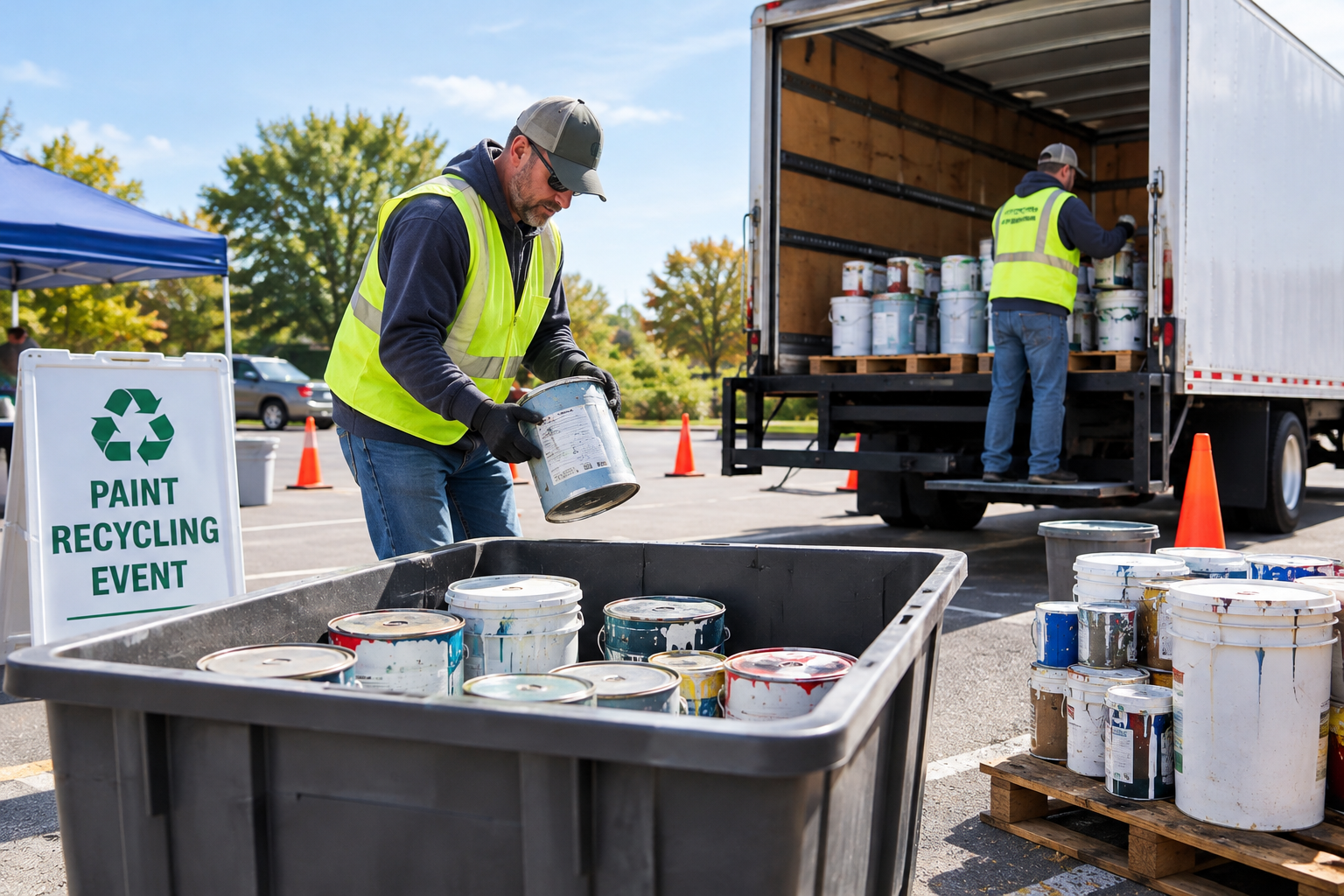
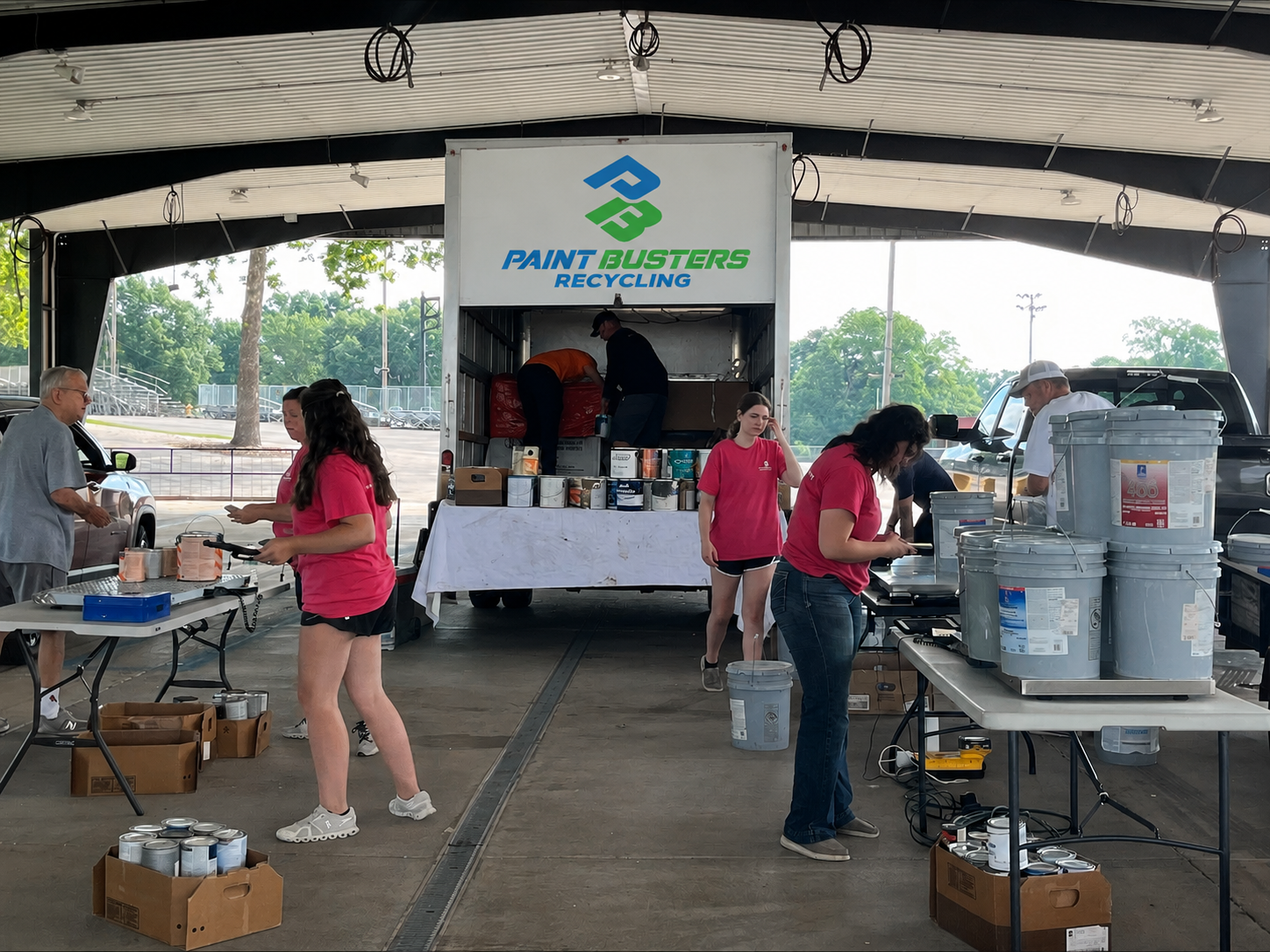
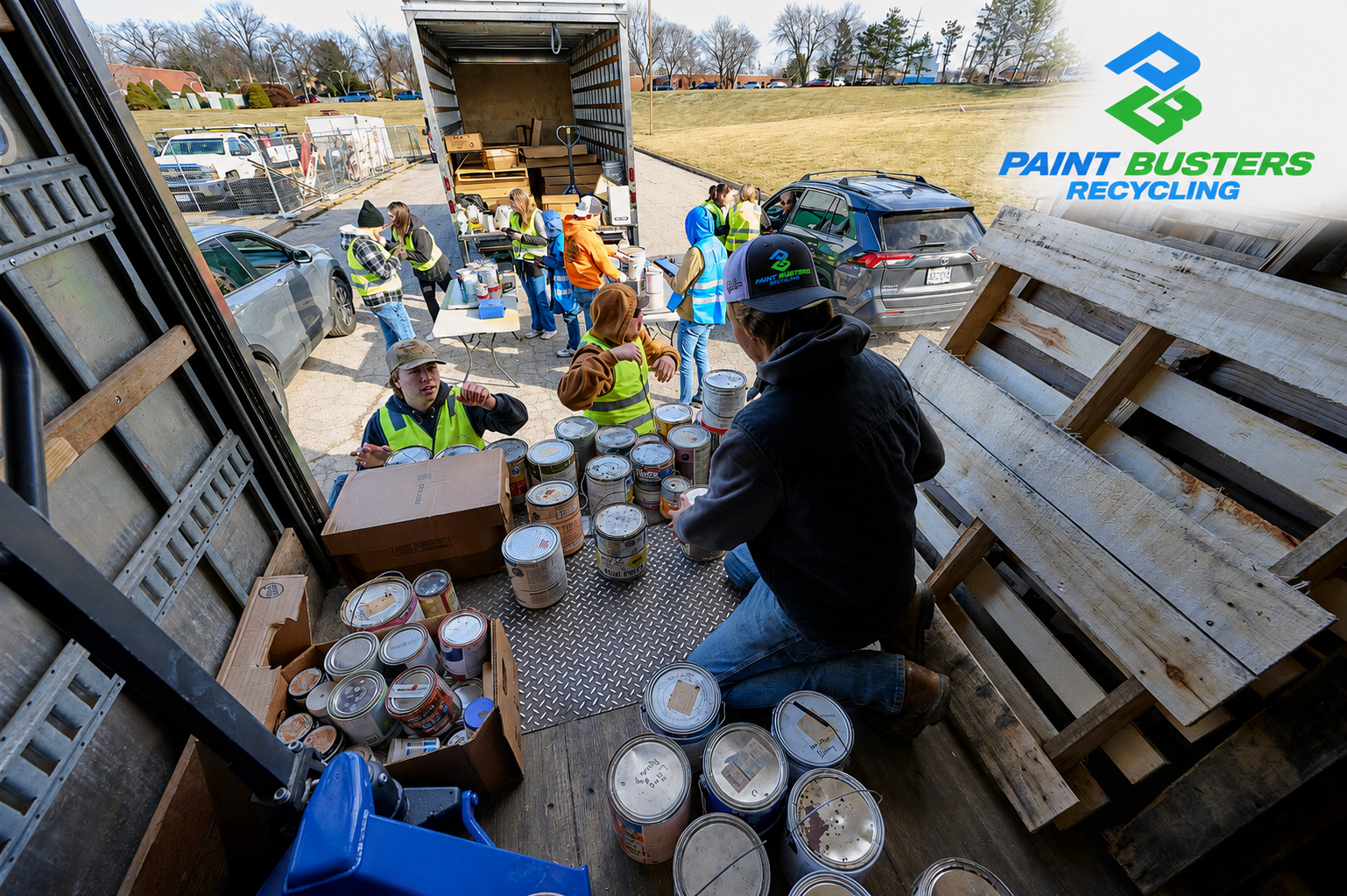
If your paint isn’t in good enough shape to donate, or you just have more than anyone wants, paint recycling solutions are the next best step. In places like Missouri, residents have access to community collection events held throughout the year (often run in partnership with cities, schools, and local organizations across counties). If your workplace or neighborhood wants to run one, Paint Busters Recycling supports environmental friendly events to host, making it easier to bring this option directly to your own community.
Find a Local Paint Recycling Service
If your paint has been sitting around for a while, or you’ve got more cans than a single event can handle, a paint pickup service is usually the easiest option. Services like Paint Busters Recycling offer latex paint recycling directly from your driveway, so there’s no drop-off point to track down and no event schedule to plan around. It’s a straightforward way to finally clear out a garage full of old cans and know they’re being handled the right way once they’re gone.
What to Avoid When Disposing of Paint
Pouring paint out or tossing it in the trash might seem like the easy way out, but both come with consequences most people don’t think about. Here’s what to avoid when disposing of paint.
Never Pour Paint Down the Drains or on the Ground
Pouring paint down a drain or onto the ground sends chemicals straight into local water systems, and from there, into rivers and groundwater that aquatic life depends on. In a lot of municipalities, it’s also illegal, fines and all.
Don’t Throw Wet Paint in the Trash
Wet paint can leak during collection, and once it does, it’s contaminating everything else in the truck along with it. Most areas actually require paint to be solidified or recycled first, and plenty of haulers won’t take a can that’s still wet.
Conclusion
Paint definitely doesn’t belong down a drain, in a landfill, or burned in the backyard. Missouri has real, accessible options, from community collection events to pickup services that come straight to your driveway.
If you’ve got cans piling up and no plan for them, Paint Busters Recycling makes it easy to finally deal with it. Register online, schedule a pickup that works for you, and leave your cans out on the day.
No driving around, no guesswork, just leftover paint finally handled the right way. Get started today and give your paint somewhere responsible to go.
FAQs
- What types of paint does Paint Busters Recycling accept?
Latex and water-based paints, including primers and stains. Full cans, partial cans, and even dried-out cans are all accepted.
- What types of paint can’t be recycled through this service?
Oil-based and lead-based paints aren’t accepted. Those need to go through your county’s household hazardous waste program instead.
- Do I need to sort my paint cans by type before pickup?
No. As long as each can is sealed and in its original container, you can leave latex paint, primers, and stains out together in one spot.
- How do I request a paint pickup from Paint Busters Recycling?
Register online with your location and how much paint you have, pick a pickup date that works for you, then leave your cans out somewhere visible, like your driveway or near the garage, on the day.
- Can my business or school host a paint recycling event with Paint Busters?
Yes. Paint Busters Recycling supports hosting paint recycling events for businesses, schools, and community organizations, making it easier to bring recycling directly to your area.